
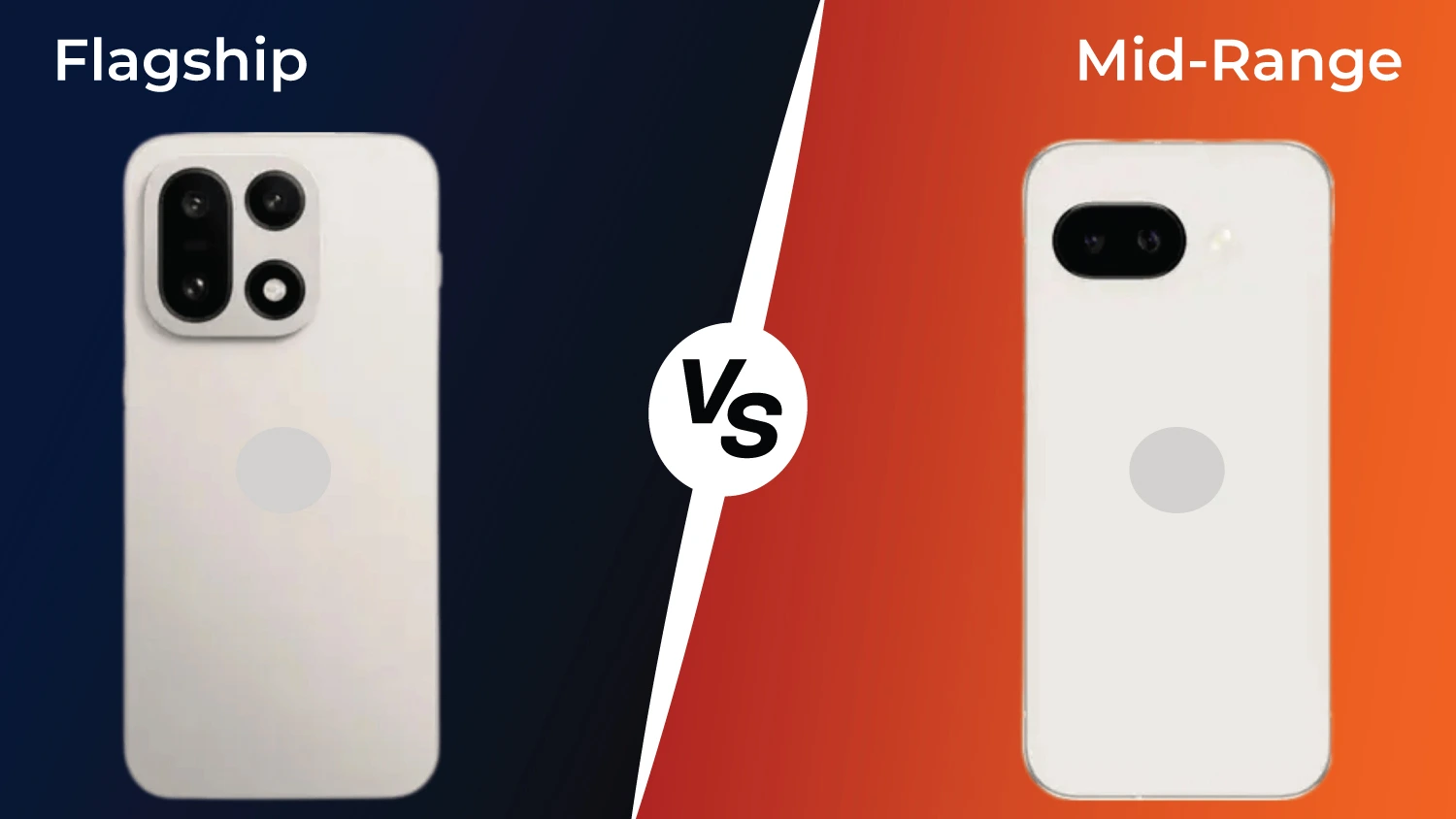
The smartphone value question
Every year phone makers push the limits: better cameras, faster chips, brighter screens. Flagship phones showcase the latest tech – but they also come with flagship prices. Mid-range phones promise a better price-to-feature ratio. So: is paying more for a flagship actually worth it? This deep dive helps you decide based on how you use your phone, not on marketing blurbs. (Mention: Gadget Radar Pro – your go-to for hands-on comparisons.)
Quick outline: what this post covers
- Clear definitions of flagship vs mid-range
- Side-by-side comparison across key categories (design, performance, camera, battery, software)
- Practical buying advice and who benefits from which tier
- FAQs and a quick checklist to take to the store
What defines a flagship vs a mid-range smartphone
Flagship: The brand’s top model for a given year. Expect the newest system-on-chip (SoC), best camera modules, premium materials (glass, metal), advanced displays (high refresh rate, HDR), and additional features like IP68 water resistance, wireless charging, and extended software support.
Mid-range: Phones that balance cost and capability. They often use slightly older but efficient chips, good display panels, competent camera systems, and typically fewer premium extras. Mid-range models aim for value, not maximum specs.
Key takeaway: Flagship = top hardware + premium extras. Mid-range = focused value + compromises where most users won’t notice.
Design & build: feel, materials, and durability
Flagships often use glass and metal, with tight tolerances and refined finishes. You’ll notice smaller bezels, curved glass, and often ceramic or polished metal frames. Mid-range phones commonly use plastic or less premium glass, though the gap has narrowed – many mid-rangers now have glass backs and attractive designs.
Why it matters: if you prize premium feel, water resistance (IP rating), and long-term scratch resistance, flagships typically win. But a good case removes most feel differences while protecting the device – making mid-range more appealing.
Performance: chips, RAM, and real-world speed
Flagships ship with the latest flagship SoCs and higher memory bandwidth – which translates to smoother multi-tasking, faster loading in heavy apps, and better future-proofing. Mid-range chips have improved dramatically; unless you’re gaming at max settings, editing 4K video, or running intensive AI tasks, mid-range performance will likely be “good enough.”
Real-world note: benchmarks show gaps in synthetic tests, but day-to-day browsing, social apps, and media playback are often indistinguishable. Power users, mobile gamers, and creators benefit most from flagship silicon.
Cameras: sensors, processing, and night-mode magic
Camera quality combines hardware (sensor size, optics) and software (processing, AI). Flagships invest in larger sensors, better telephoto zooms, and advanced multi-frame processing – leading to superior low-light photos, better dynamic range, and more reliable portrait shots.
Mid-range phones have closed the gap with clever computational photography and decent sensors – you can get excellent daylight photos and usable night shots. However, long-range zoom, consistent ultra-low-light performance, and top video stabilization often remain flagship territory.
If photography matters: pick a flagship. If you share to social media, take daytime photos, and don’t need optical zoom beyond 2–3x, a high-end mid-range can be perfect.
Battery life & charging: capacity vs optimization
Larger batteries are common at all price points. Mid-range devices sometimes trade peak performance for efficiency, resulting in excellent battery life. Flagships may have faster wired/wireless charging, better thermal management under load, and software features that optimize longevity.
Practical tip: check real-world battery tests for your model. A mid-range with a 5,000mAh battery and efficient software can outlast a flagship with a smaller cell and power-hungry screen.
Display & multimedia: refresh rates, color, HDR
Flagships typically have the brightest, most color-accurate OLED displays with adaptive refresh rates and full HDR support – great for watching movies, gaming, and outdoor visibility. Mid-range screens have improved: many now include AMOLED panels and 90–120Hz refresh rates, but brightness, peak HDR, and color calibration might lag.
Bottom line: for media lovers and mobile gamers, flagship displays offer a richer experience. For most casual viewers, mid-range displays are excellent and often indistinguishable unless compared side-by-side.
Software, updates, and long-term support
Flagship buyers usually get the longest software support – both major Android upgrades and security patches. Some manufacturers now offer flagship-level update commitments only for their premium models. Mid-range phones may receive fewer OS upgrades and shorter security patch timelines.
Why it matters: longer software support means security, new features, and better resale value. If you plan to keep a phone 3+ years, software longevity becomes a strong argument for a flagship.
Extras that matter: IP rating, wireless charging, audio, accessories
Flagships often include:
- IP68 water/dust resistance
- Wireless charging and reverse charging
- Stereo speakers, better microphones
- Advanced biometrics (under-display ultrasonic sensors)
Mid-range models may lack some of these or include scaled-down versions. Decide which extras you’ll actually use – wireless charging and water resistance are convenient, but not essential for everyone.
Resale value and total cost of ownership (TCO)
Flagships depreciate slower and often hold higher resale prices, which can offset the initial premium. Mid-range phones lose value faster but have lower upfront costs. Consider warranty, expected lifespan, and whether you upgrade frequently.
TCO example: a flagship bought at launch might retain 40–60% of its value after a year, reducing effective monthly cost. A mid-range may fall to 20–30% in the same time – but because it costs less upfront, overall expenditure can still be lower.
Who should buy a flagship – and who shouldn’t
Buy a flagship if:
- You’re a power user or mobile gamer.
- Photography/videography is important.
- You want the best display and build quality.
- You keep phones for 3+ years or want better resale.
- You need long software support and premium extras.
Choose mid-range if:
- You’re budget conscious or upgrade often.
- You want strong battery life and good cameras for social sharing.
- You’re okay with a few feature compromises (wireless charging, IP rating).
- You want the best value per rupee – especially in 2025 where mid-range options are very capable.
How to choose the best mid-range for maximum value
- Prioritize features: camera or battery? Pick the model that invests in your priority.
- Check display specs: AMOLED + 90–120Hz is ideal.
- Software updates: prefer brands that offer 2–3 years of OS updates.
- Look for fast charging and large battery capacity.
- Read camera comparisons focused on your use case (night, portrait, video).
Pro tip: read hands-on reviews and real user feedback to spot long-term issues like heating and software bugs. Gadget Radar Pro’s comparative reviews can help narrow choices.
Quick buying checklist (printable)
- Use case: gaming / photo / battery / budget
- Display: OLED? refresh rate? brightness
- Battery: mAh + charging speed
- Camera: main sensor size + OIS + night mode
- Software: OS updates promised
- Extras: IP rating, wireless charging, stereo speakers
- Price vs resale: estimate 1-year resale value
- Hands-on feel: visit store if possible
FAQs
Are mid-range phones good enough for photography?
Yes for most users. Mid-range cameras produce excellent daytime photos and decent low-light shots thanks to computational photography. For advanced zoom, pro video, or the absolute best low-light performance, flagship cameras still lead.
Do flagship phones last longer than mid-range devices?
Generally yes. Flagships often receive longer software support, higher-quality materials, and better thermal design – factors that extend usable life. However, a well-made mid-range can last 2–4 years if cared for.
Should I buy last year’s flagship instead of a current mid-range?
Often a smart move. Last year’s flagship can offer flagship-level performance at a mid-range price once discounted – combining power, cameras, and features with better value.
Is the faster charging in flagships worth it?
Fast charging saves time but can be stressful for battery longevity at extreme speeds. A balance: look for phones with good charging speeds (e.g., 65W) and decent battery health management.
Do software updates really matter?
Yes – security, feature updates, and performance improvements come via updates. If you keep a phone multiple years, better update policy reduces risk and improves longevity.


