
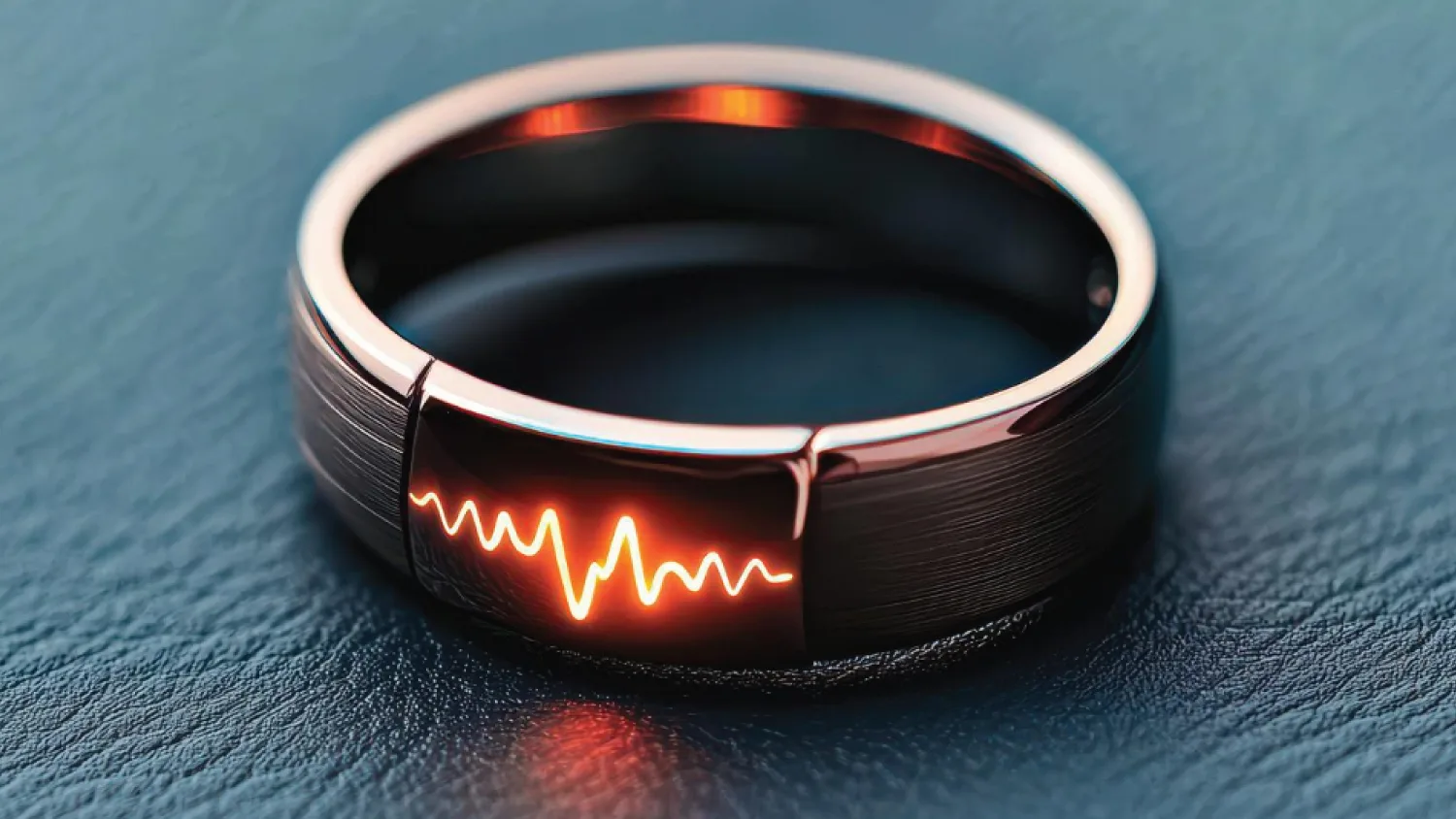
Why 2025 is a turning point for wearables
A few technical and market changes converged by 2025: more powerful NPUs at the edge, better low-power sensors, clearer clinical validation pathways, and renewed device design focus (fashion + function). Companies are no longer satisfied with incremental step-ups; they’re integrating AI models, medical-grade sensors, and new form factors to widen use cases beyond fitness into chronic care, workplace safety and daily productivity. Market reports and CES signals in early 2025 emphasize this shift toward health, AI and luxury/lifestyle integrations.
Top trends to watch in 2025
1.1 On-device and generative AI: smarter, faster, private
AI is the dominant theme in 2025 wearables. Instead of sending raw sensor streams to the cloud, many devices now run compact models on-device for instant insights: anomaly detection, personalized coaching, contextual voice replies, and efficient sensor fusion. Generative AI features-short summaries of sleep trends, customised fitness plans, or natural-language health explanations-are moving from prototypes into consumer firmware, with privacy preserved by edge processing and selective cloud syncing.
Why it matters: faster feedback (no roundtrip latency), reduced battery/transfer costs, and stronger privacy guarantees when sensitive health signals stay local.
1.2 Clinical-grade sensors and healthcare integration
The line between consumer wearables and medical devices continues to blur. In 2025 we see more devices validated for clinical use: continuous ECG patches, improved pulse-ox accuracy, temperature and hydration metrics, and accelerated work on non-invasive glucose sensing. Startups and research labs push AI models to make sensor outputs clinically meaningful-detecting arrhythmias, flagging early respiratory issues, or supporting chronic disease management workflows. Clinical integrations with EHRs and telehealth platforms are beginning pilots in select regions.
User takeaway: Wearables are increasingly useful for early detection and remote monitoring, but consumers should still treat most devices as adjuncts to-not replacements for-professional medical care.
1.3 Smart glasses & AR: finally moving toward mainstream wearables
Smart glasses-once a niche-are gaining momentum due to lighter optics, Android XR platforms and partnerships between fashion brands and tech firms. 2025 announcements and partnerships signal a push to make glasses both useful and stylish: voice/visual assistants, subtle heads-up navigation, and hands-free translations are the near-term use cases. Developers are prioritizing low-distraction UI and privacy by design.
Keep an eye on: two device types-audio/assistant-first glasses (screen-free) and in-lens display models for discreet overlays.
1.4 Hearables & open-ear audio: safety plus always-on assistance
Hearables continue to evolve beyond music. Open-ear earbuds and bone-conduction designs-which keep the ear canal free-are being refined for better sound and adaptive noise control. The big promise: always-available voice assistants, environmental awareness for runners/cyclists, and health sensing through voice and ear-based vitals. Major audio brands and new entrants are expanding this category in 2025.
1.5 Battery life, energy harvesting & solar charging gains
Long battery life remains a top demand. In 2025, watchmakers and ring designers combine ultra-efficient chips, OS optimisations, and passive charging tactics (solar watch bezels, kinetic recovery in active bands) to keep devices running longer between charges-sometimes for days or weeks depending on use. This improvement removes one of the main friction points for mainstream adoption.
1.6 Smart clothing, rings and discreet form factors
Look beyond the wrist. Smart rings, embedded textiles, and sensor patches broaden where and how we collect data. Rings offer discrete sleep, HRV and recovery metrics; smart shirts and compression garments collect motion and respiratory data for athletes or rehabilitation patients. These form factors open new verticals (sports performance, workplace safety, eldercare).
1.7 Privacy, regulation and data portability
With health data more central, regulators in many regions are clarifying what qualifies as medical data and how it must be handled. Companies are investing in privacy controls, local processing and clear export tools so users can take their health histories to clinicians or new apps. Expect stricter labeling, clearer consent flows, and more transparent algorithms in product UIs.
What these trends mean for users and businesses
- Users get more accurate, actionable insights (and more device choice)-but must be deliberate about privacy, subscription models, and device-to-doctor data flows.
- Healthcare providers can leverage passive continuous monitoring for triage and remote care-but integration, reimbursement and validation remain work in progress.
- Businesses and developers should design for on-device AI, emphasize low-power UX, and consider partnerships (fashion, medical, telecom) to reach wider audiences.
Buying checklist: choosing a 2025 wearable that fits you
- Use case first: health monitoring, sports, productivity or style? Different devices prioritize different sensors.
- Sensor quality & validation: look for clinical studies or third-party validation if health is critical.
- Battery & charging: realistic battery tests (real life, not lab). Solar or extended modes are a plus.
- On-device AI & latency: local features matter if you want instant replies or privacy.
- Ecosystem & compatibility: does it work with your phone, cloud service or doctor’s platform?
- Privacy & exportability: check settings for raw data access and deletion.
The near future (2026–2028): quick predictions
- Smart glasses become a viable second screen for productivity and navigation in urban settings.
- Non-invasive glucose sensing reaches limited consumer pilots or regulated devices in select regions.
- Wearable AI marketplaces emerge where third-party health apps run small models on your device-secure and opt-in.
FAQs
Are 2025 wearables accurate enough for medical decisions?
Many 2025 devices reach clinical-grade accuracy for specific metrics (e.g., single-lead ECG for rhythm detection, improved SpO₂), but most are still best used as monitoring and triage tools. Always consult a clinician for diagnosis or treatment decisions.
Will my wearable keep my health data private?
Privacy varies by vendor. The trend in 2025 is toward more on-device processing (reducing cloud exposure) and clearer privacy controls-but read privacy policies and set device-level permissions.
Are smart glasses ready for everyday use?
Some mainstream-style smart glasses (audio/assistant models and in-lens displays) are maturing; fashion collaborations and lighter hardware are making them more wearable in daily life. Still, battery and app ecosystems are catching up.
Do I need to pay subscriptions for advanced features?
A growing number of wearables ship with free baseline features and premium subscriptions for advanced AI analytics, cloud history, or clinician dashboards. Factor ongoing costs into your purchase decision.
What should businesses do to prepare?
Prioritize low-power edge AI, privacy-first design, and clear data export options. Consider clinical collaborations if you plan to enter health verticals.


